
The Dangers of Misrepresenting OCD, and What It Actually Looks Like
We’ve all likely heard someone say “I’m a little OCD about that,” when describing their cleanliness or organization preferences. Even real mental health professionals in media, including Dr. Orna Guralnik on her popular show, Couples Therapy, make statements like “it is very good to have OCD people in one’s life,” referring to the idea of being “orderly,” and “on top of things.”
Statements like this, along with other misrepresentations, can contribute to barriers for necessary care and treatment. On average, it takes nearly 13 years from the onset of symptoms before someone is accurately diagnosed with OCD (Ziegler et al., 2021). Those navigating OCD face a significantly higher risk of suicide, and are around 10 times more likely to die by suicide compared to those without OCD (Fernández de la Cruz et al., 2016).
What is OCD?
OCD consists of having unwanted thoughts, urges, mental images, and ideas that are ego-dystonic, meaning they go against what the individual truly values. These experiences can cause significant distress, and attempts are made to relieve this by performing different rituals or behaviors called compulsions. Compulsions can be physical or mental, and can be hard to identify. Hours of the day are spent having these unwanted thoughts and compulsions.
Possible OCD themes:
Harm OCD: unwanted thoughts, images, urges, or ideas about harming others
Pedophilic OCD: unwanted taboo sexual thoughts, urges, or images about children
Suicidal OCD: unwanted thoughts, images, or ideas of harming self
Real Event OCD: excessive concern about something that occurred (What if it happens again, what does it mean about me that I did that?)
Contamination OCD: fear of contracting or spreading germs/illness
Relationship OCD: unwanted concerns of being in the wrong relationship (What if I cheat, what if they don’t actually love me? Did we hold hands for long enough?)
Moral/Scrupulosity OCD: concerns and unwanted thoughts about being a bad person, blurting out obscenities, not saying just the right thing (racist, selfish, narcissistic, sexist, inauthentic, etc.)
Postpartum OCD: unwanted fears that you may harm your newborn
OCD for exactness or symmetry: urges for something to be done “just right,” or “complete.”
False-memory OCD: concerns something happened or you did something that you don’t remember
Meta OCD: concerns whether or not you really have the condition (Is it really OCD? Am I making it up? My case is different)
Somatic OCD: concerns with having illness or disease (Is this headache cancer? Is my breathing normal?)
…and more
Possible Compulsions:
Physical:
excessive or specific washing routines
going back to check things
repetitive actions
aligning or moving things in a specific way to make sure they feel “just right,” or to prevent something bad from happening
searching online for answers
asking reassurance-seeking questions
avoiding people, places, or things that trigger unwanted thoughts
Mental:
replaying events in your head
making reassurance statements to yourself (It’s fine, I wouldn’t do that, that didn’t happen)
trying to block a thought or think of the complete opposite to “cancel it out”
emotional checking (Am I currently feeling the “correct” emotion, what does that mean about me?)
repetitive prayer
counting
compulsive rumination to urgently “figure it out.”
thinking of every possible future scenario to try and make the best possible outcome
Examples of OCD:
What if I said the wrong thing and they’re mad? Maybe if I had worded it differently? I need to make sure by replaying our interaction, checking and remembering their facial expression when I said that.
Maybe I don’t really have anxiety or depression, what if I have something else instead like a personality disorder? Maybe I’m lying to everyone about who I truly am and instead I have a split personality. I need to reassure myself this isn’t true by asking my friends what they think of me, or checking reddit to search for symptoms of personality disorders.
I just had an image of myself crashing my car. Do I want to end my life? Why would I think that? I’m going to avoid driving, or make sure someone’s in the car with me in case I think this again.
The “Doubting Disorder,” and the Role of Uncertainty
OCD thoughts can be relentless, and latch on to anything. This can make it difficult to discern from general anxiety. One way we can better identify OCD is recognizing that its nickname is “the doubting disorder.” Those with OCD struggle significantly with uncertainty. They feel a great sense of urgency to resolve these thoughts that are constantly questioning and having them doubt themselves, this is where the false need for compulsions come in.
OCD will have you question everything:
“What does this thought mean about me?”
“Maybe I actually like these thoughts.”
“Am I a horrible and dangerous person?”
“How do I make sure this will not happen?”
Overactive Brain Alarm
OCD does a great job of making you feel like the intrusive thoughts, images, urges, or ideas are important. This is because the orbitofrontal cortex (OFC), the part of the brain that evaluates threat, is working in overdrive (Ursu et al., 2009). OCD lies and says, “you need to pay attention to this, you cannot handle not knowing!” then demands that you obtain certainty. The communication loop in this part of the brain is stuck in a cycle, like an alarm never turning off. When OCD demands the answer from you, and a compulsion is done to try to prove the thought is or isn’t true, it reinforces the message that this thought is important. Compulsions do not get rid of unwanted thoughts, they reinforce the feedback loop. After you do the compulsion, OCD will continue to plant more doubts:
“Are you sure though?”
“Deep down you know the truth.”
“What if next time it’s different?”
Once meaning is attached to the thoughts, they have the power.
Therapeutic Approach
So how do we break this feedback loop? Alongside the option for medication, and having a consistent exercise routine, we use the gold standard treatment for OCD called Exposure and Response Prevention therapy (ERP) (Hezel & Simpson, 2019). Individuals are exposed to stimuli that trigger the unwanted thoughts and anxiety, and are taught to refrain from doing compulsions that feed the cycle. This changes the relationship with thoughts, and teaches that the anxiety these thoughts initially evoke is manageable. Over time, by learning to allow the thought to be there without fighting, fixing, rationalizing, or trying to figure it out, the anxiety decreases. The thoughts lose “meaning,” and their power.
Individuals practice non-engagement rather than compulsions, including statements like “maybe,” or “I’m not trading my time for certainty.” This builds tolerance to sitting with uncertainty. Similar to when someone is uncertain if they will fall down when walking, yet chooses to walk every day. This process is now being applied to areas OCD is trying to convince you are “important.” The type of theme does not matter, the approach is always the same: let the thought be, use non-engagement, refrain from compulsions.
It is important to know that those going through ERP will feel worse before they feel better. It is difficult to stop compulsions that feel automatic, and have been around for so long to provide temporary relief. The important thing to remember, however, is that the relief from compulsions is exactly that — temporary. If compulsions continue, so will the distress cycle. The beginning of ERP can feel like torture when you are not used to sticking with the discomfort. Over time, individuals learn how strong they truly are by proving they can live with uncertainty, when OCD tells them they cannot. Similar to physically training at the gym, they train an “anxiety muscle” that gets stronger each time they practice ERP. Therapists are there to co-regulate, help use distress tolerance skills, and be their biggest cheerleader. Those using ERP start to gain more self-compassion, and changing their relationship with intrusive thoughts and uncomfortable feelings helps them regain power over their lives. The thoughts no longer rule them.
How Traditional Talk Therapy Causes Harm, and Assessment is Key
Even well-intentioned therapists can cause harm if they do not understand the OCD feedback loop. Oftentimes they provide clients reassurance, checking evidence to challenge thoughts, and figure out why a client is thinking or feeling a certain way. Some therapists work to find meaning behind thoughts and behavioral patterns by digging into past events or memories. These are all compulsive behaviors that reinforce the idea that these thoughts have importance, and that we need to pay attention to the overactive false alarm. This will add fuel to the OCD fire, and feed the cycle that will spit out more doubts. Some therapists may also misunderstand intrusive, unwanted thoughts as intentional, and label someone as a danger to themselves or others. This can lead to serious, negative consequences for a client. Reminder: OCD thoughts, images, urges, and ideas are unwanted, cause distress, and are ego-dystonic.
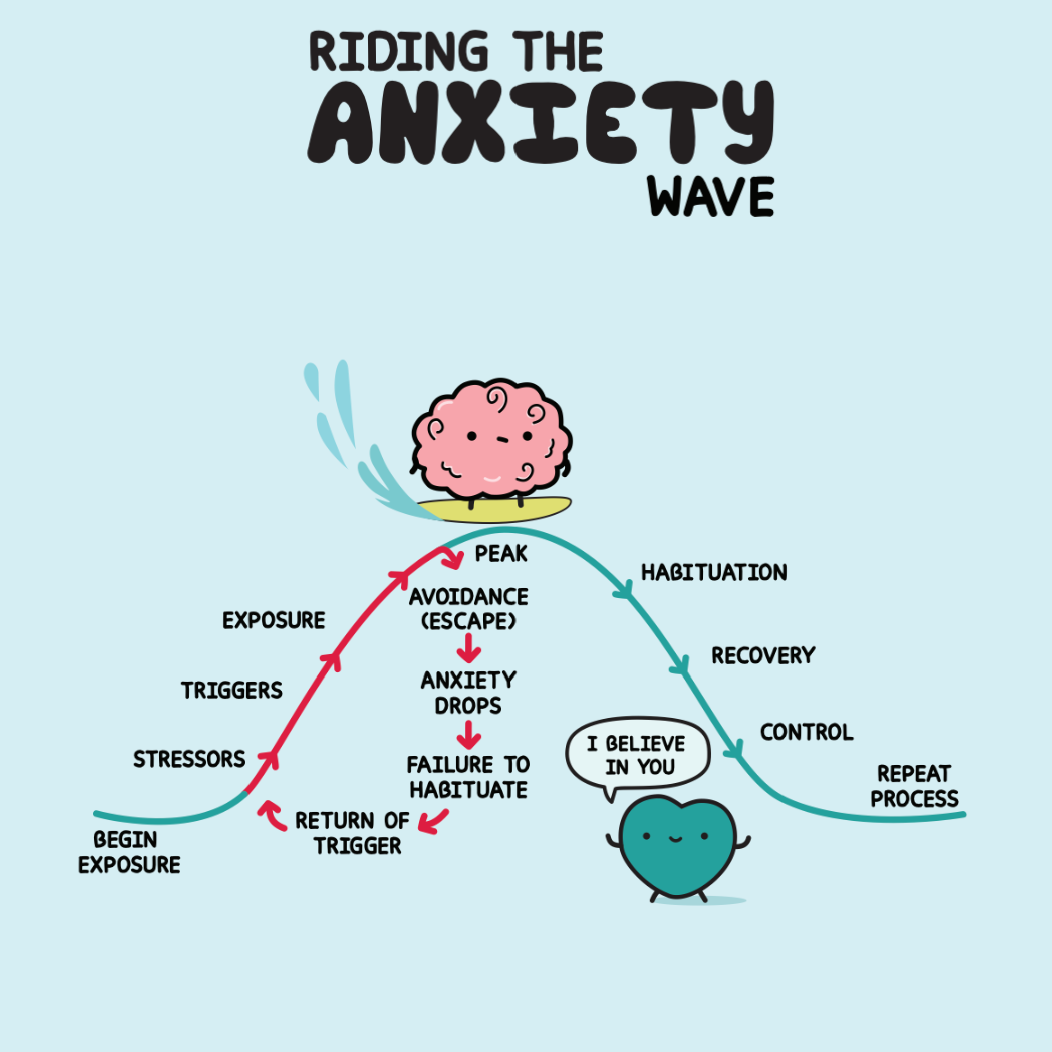
image: @heartsofgrowth
Get the Care You Deserve
If you or someone you know is navigating OCD, know that you are not alone. There is help and support that can provide relief, and you deserve to get appropriate care to help you reclaim your life and sense of self. To learn more or get support, check out these resources:
Instagram Accounts:
Higher level of care programs for OCD, Chicagoland:
The OCD & Anxiety Center: Oakbrook & Orland Park
Podcasts & Episodes:
Dr. Steven Phillipson, “Two Tail Spikes in OCD” (Ep. 182)
Jon Grayson and Bob Cianfrone, “A Fear of Going Crazy” (Ep. 211)
The Anxiety Toolkit with Kimberley Quinlan
“How to Reduce Reassurance-Seeking Behaviors/Compulsions” (Ep. 32)
Books:
Freedom From Obsessive Compulsive Disorder: A Personalized Recovery Program for Living with
Uncertainty, Jonathan Grayson
Your OCD Will Hate This Book: A Proven System to Overcome Obsessive Compulsive Disorder and Take
Back Your Life, Nathan Peterson
Citations:
Fernández de la Cruz, L., Rydell, M., Runeson, B., D’Onofrio, B. M., Brander, G., Rück, C., Lichtenstein, P., Larsson, H., & Mataix-Cols, D. (2016). Suicide in obsessive–compulsive disorder: A population-based study of 36,788 Swedish patients. Molecular Psychiatry, 21(9), 1188–1194. https://doi.org/10.1038/mp.2016.115
Hezel, D. M., & Simpson, H. B. (2019). Exposure and response prevention for obsessive-compulsive disorder: A review and new directions. Indian Journal of Psychiatry, 61(Suppl 1), S85–S92.
Ursu, S., & Carter, C. S. (2009). An initial investigation of the orbitofrontal cortex hyperactivity in obsessive-compulsive disorder: Exaggerated representations of anticipated aversive events? Neuropsychologia, 47(10), 2145–2148. https://doi.org/10.1016/j.neuropsychologia.2009.03.018
Ziegler, S., Bednasch, K., Baldofski, S., & Rummel-Kluge, C. (2021). Long durations from symptom onset to diagnosis and from diagnosis to treatment in obsessive-compulsive disorder: A retrospective self-report study. PLoS One, 16(12), e0261169. https://doi.org/10.1371/journal.pone.0261169